

THE LAW OF Drift
The theory behind The Discipline of Direction™

The Law of Drift
Every human system naturally moves away from intentional alignment with what matters most and what is required for future success.
Individuals drift. Teams drift. Organizations drift. Boards drift.
The question is not whether drift will occur. The question is whether we recognize it before small deviations become significant consequences.
Drift is rarely dramatic. It is almost always incremental. It doesn't announce itself through crisis — it accumulates through choices that seem reasonable in isolation: a postponed conversation, a compromise excused because someone delivers results, a value celebrated publicly but quietly set aside in practice. None of these looks significant on its own. Collectively, they redefine the direction of a life or an organization.
By the time drift is visible on a financial statement, a performance review, or in the mirror, it has usually been developing for years. That's what makes it dangerous — and what makes recognizing it a discipline, not an accident.
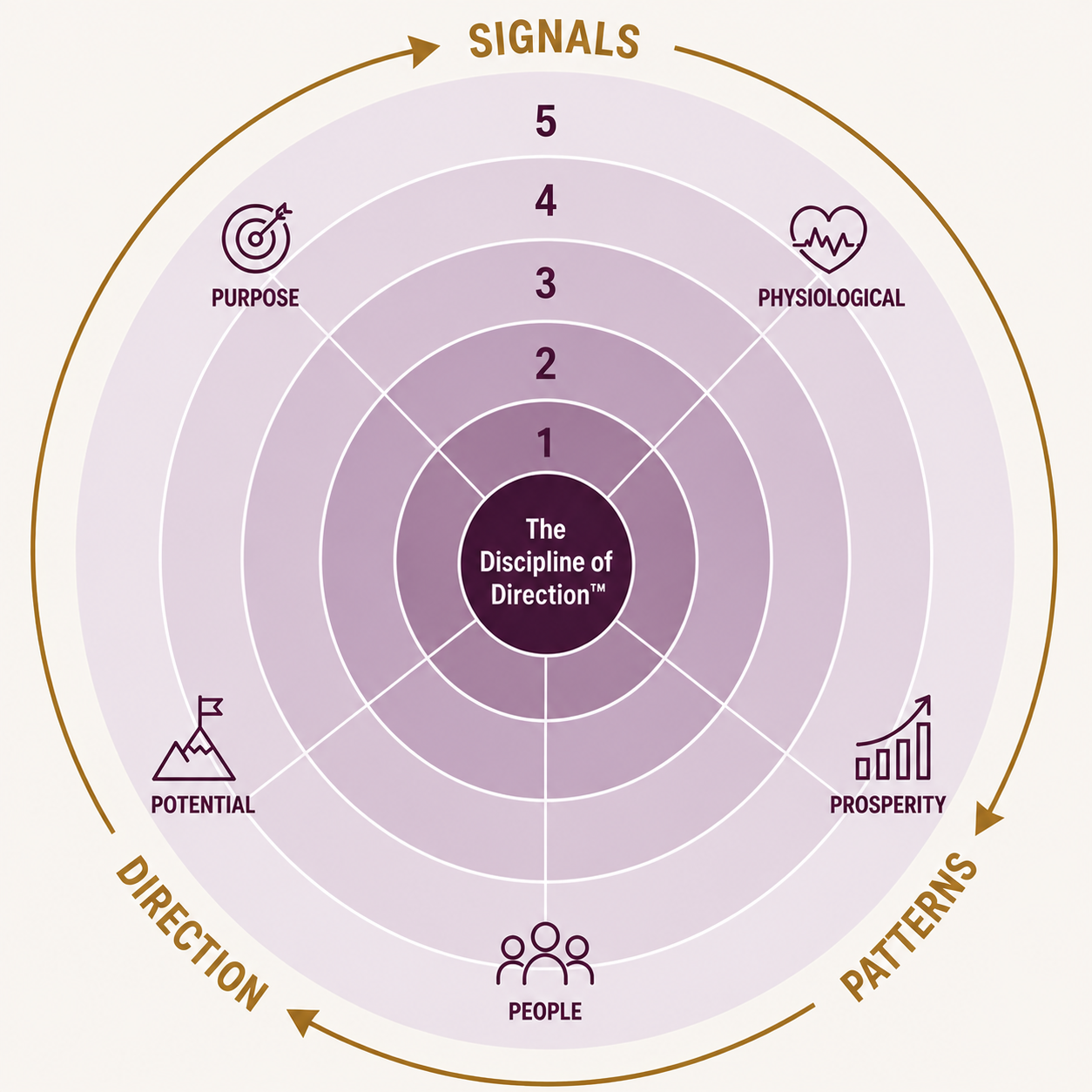

How and Where Drift Shows Up
Every human system, without intention, naturally moves away from alignment with what matters most and what is required for future success.
Inertia – what is in motion stays in motion
Accumulation – small compromises compound.
Gravity – comfort, success, and expectations pull us toward the status quo.
Physiological
Prosperity
People
Potential
Purpose
Complacent
Incremental
Avoidant

The Discipline of Direction™
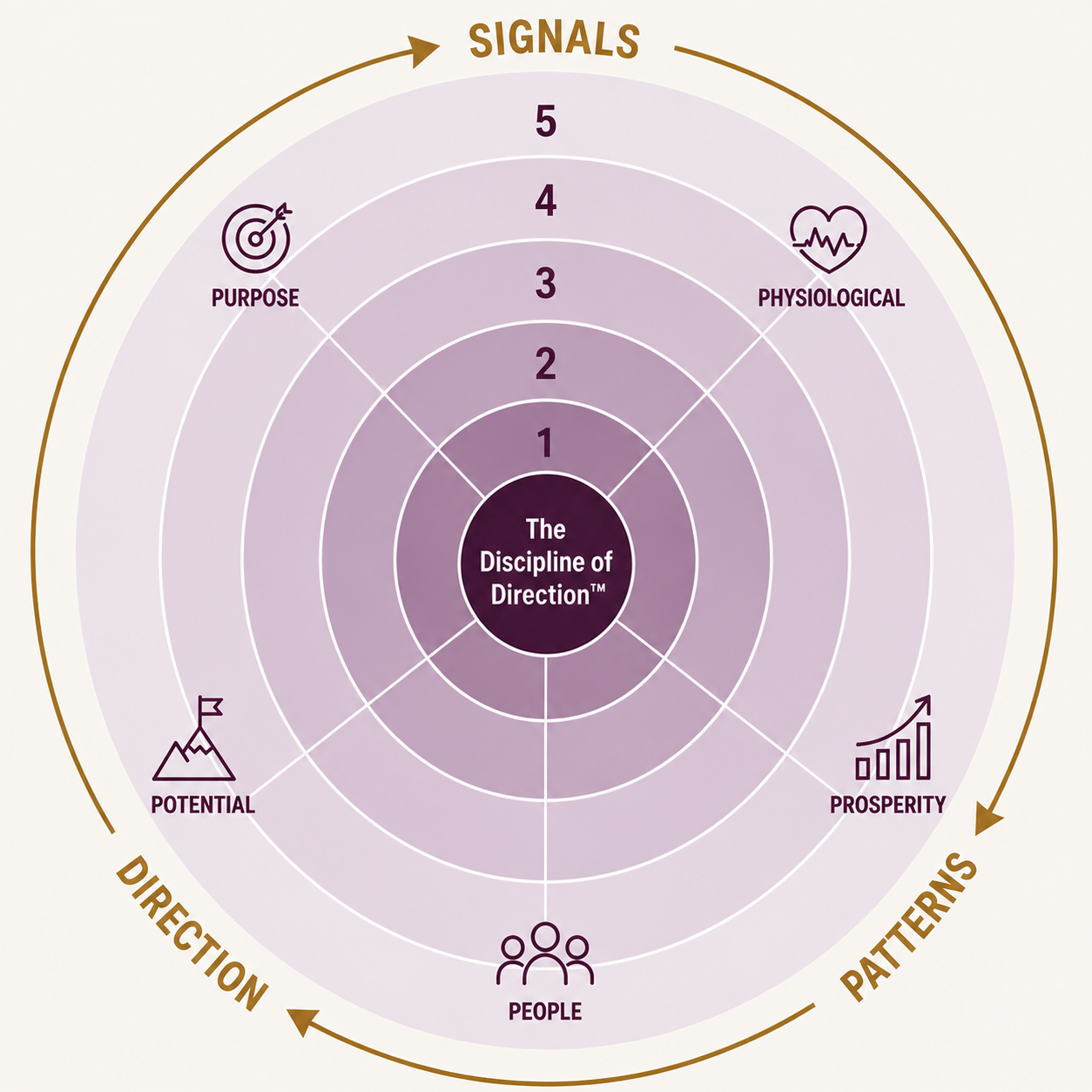
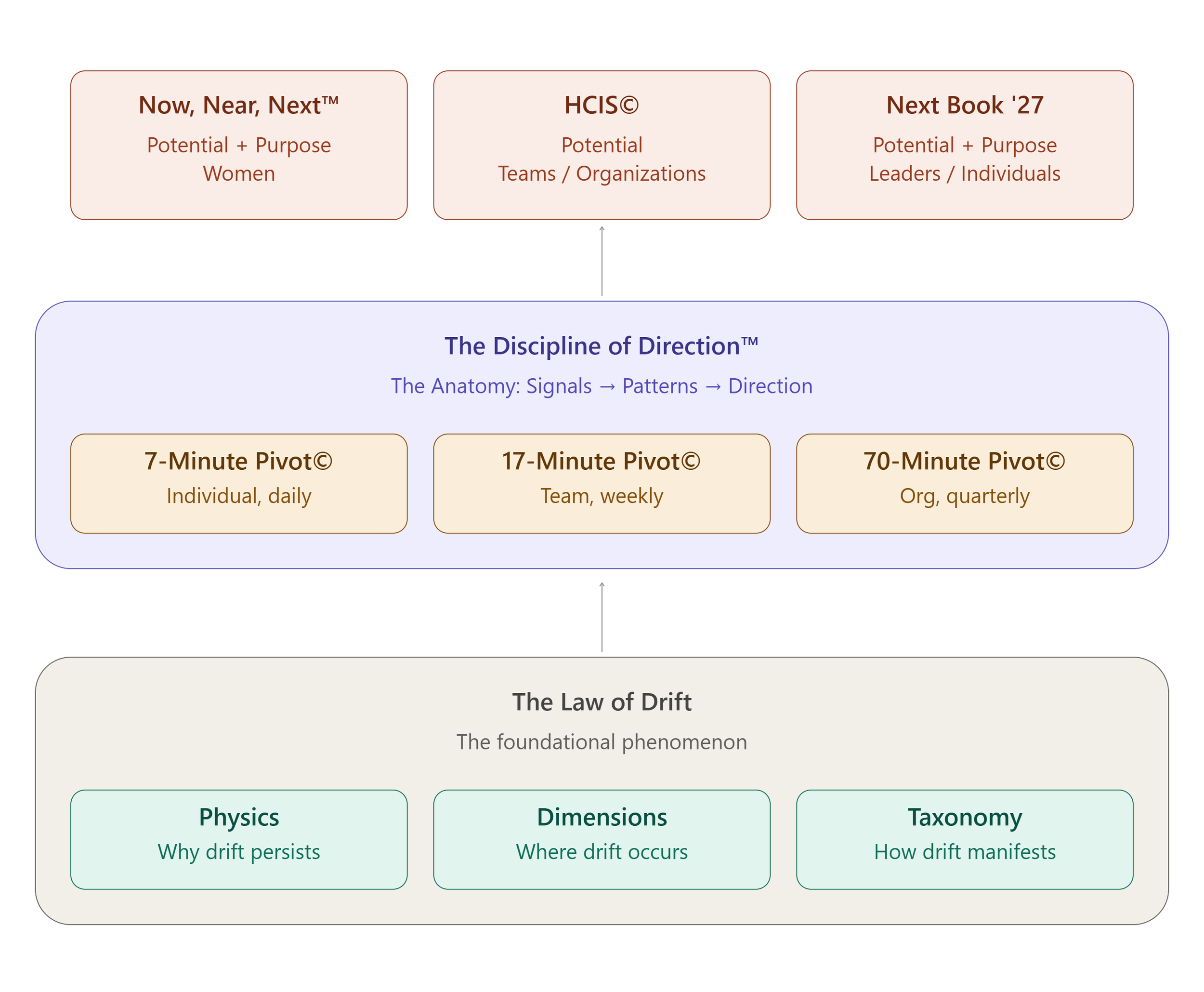
If drift is the problem the Law of Drift describes, The Discipline of Direction™ is the practiced response to it — the belief that direction is a discipline, not a destination, and that clarity is an active practice, not a stroke of luck.
Every application of the Discipline follows the same three-step structure, at whatever scale it's applied:
Recognize Signals. Identify Patterns. Choose Direction.
That structure scales into a family of practices — the 7-Minute Pivot for individuals, daily; the 17-Minute Pivot for teams, weekly; the 70-Minute Pivot for organizations and boards, quarterly.
Same discipline. Different human systems.
Where are you Drifting?
Start with the Diagnostic built for where you sit — Individual, Team, or Organization.